Mumbai from Ahmedabad: a traveller's guide
Non-stop flights from Ahmedabad reach Mumbai in about an hour. Here is how to plan your stay, what to see and what to eat.
Getting to Mumbai
Non-stop flights from Sardar Vallabhbhai Patel International Airport (AMD) to Chhatrapati Shivaji Maharaj International Airport take roughly one hour and ten minutes. Check current schedules as timings and carriers change. The straight-line distance between the two cities is about 460 kilometres. Flights arrive at both Terminal 1 (domestic) and Terminal 2 at Mumbai airport. From the airport, prepaid taxis and app cabs are the most direct way to reach your accommodation. Booking flights early is advisable during weekends and festival periods when seats fill quickly.
Trains from Ahmedabad Junction to Mumbai Central or Dadar are an alternative, taking about six to seven hours on the fastest services. Several overnight and day trains connect the two cities. The railway journey offers a different pace and views of the Gujarat and Maharashtra countryside. Upon arrival at Mumbai Central or Dadar, local trains, taxis and app cabs connect to all parts of the city. For those who prefer driving, the national highway between Ahmedabad and Mumbai is about 530 kilometres by road, but traffic and tolls should be factored in.
Where to stay
Mumbai offers distinct neighbourhoods for different needs. Colaba and Fort are the historic heart, close to the Gateway of India, the Taj Mahal Palace, museums and the colonial architecture of the Oval Maidan. This area suits first-time visitors who enjoy walking and heritage sights. Bandra, on the western suburbs, is a lively hub of cafes, boutiques and nightlife, popular with younger travellers. Juhu is known for its beach and film-industry presence, with a relaxed seaside vibe. Andheri and the airport area is practical for short stays or transit, with many options near the airport and commercial centres.
Lower Parel, once a mill district, is now a business and shopping zone with modern hotels and easy access to the southern parts of the city. Each area has its own character and transport links. Colaba and Fort are walkable and close to major landmarks. Bandra has a mix of old bungalows and new high-rises. Juhu offers a quieter stay with beach walks. Andheri provides convenience for early flights. Lower Parel suits those who want modern amenities and metro connectivity. Consider your itinerary and budget when choosing a base.
- Colaba & Fort: walking distance to major landmarks and waterfront.
- Bandra: nightlife, street food and a mix of old and new Mumbai.
- Juhu: beach walks, sunset views and a quieter stay.
- Andheri & airport: convenient for early flights or business trips.
- Lower Parel: modern hotels, malls and good metro connectivity.
What to see and do
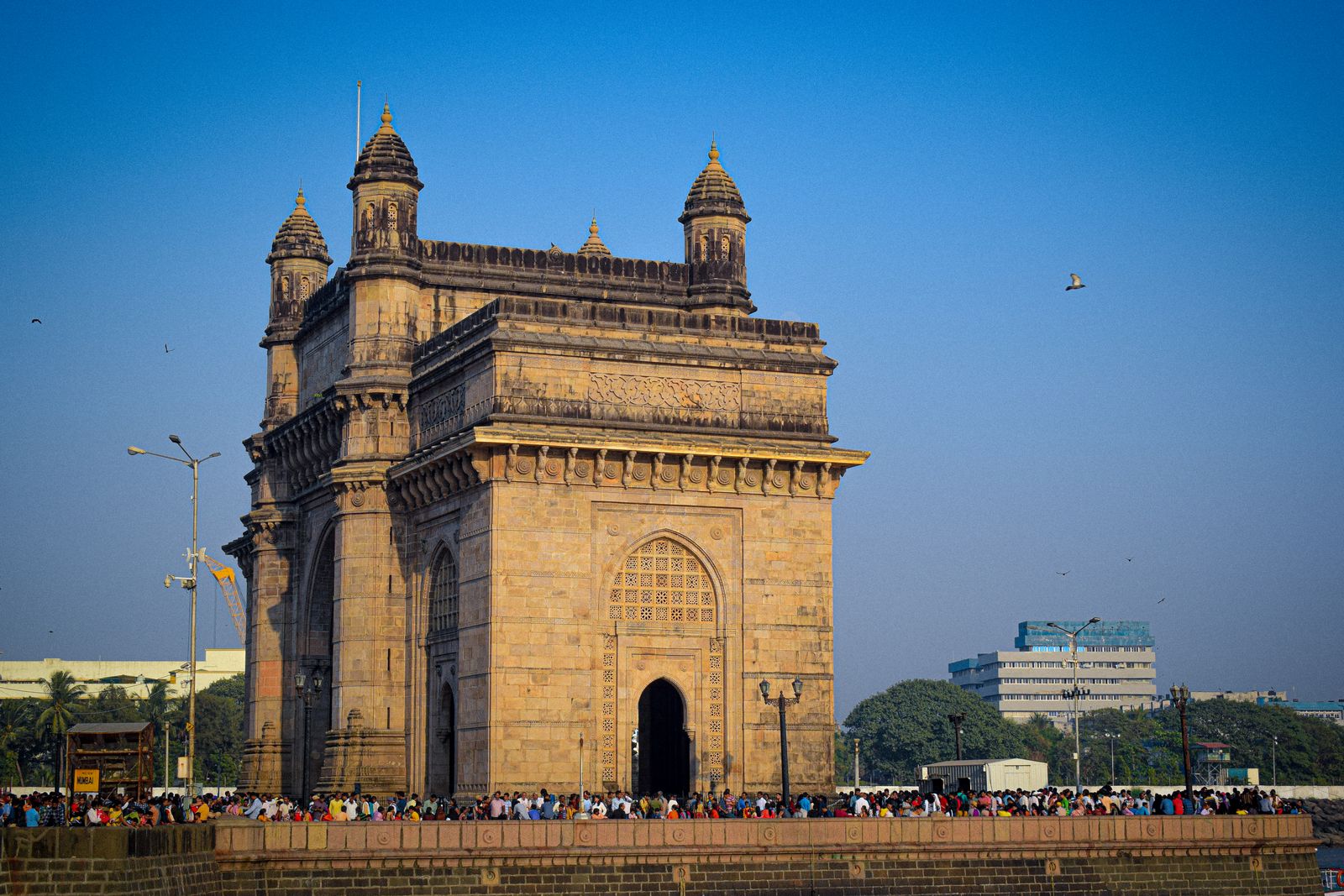
Start with the Gateway of India, the arch-monument built in 1924 on the waterfront in Colaba. Nearby, the Chhatrapati Shivaji Maharaj Vastu Sangrahalaya (formerly Prince of Wales Museum) houses a fine collection of Indian art and artefacts. Take a ferry to Elephanta Island (a UNESCO site) to see the ancient cave temples carved into rock; check ferry timings and monsoon closures. Walk along Marine Drive, known as the Queen's Necklace for its curve of lights at night. Visit the Dhobi Ghat, an open-air laundry, and Crawford Market for its Victorian Gothic building and fresh produce.
For a quieter outlook, the Hanging Gardens on Malabar Hill offer green space and views of the skyline. In southern Mumbai, the Chhatrapati Shivaji Maharaj Terminus, a UNESCO-listed railway station, showcases ornate Gothic Revival architecture. The Sanjay Gandhi National Park in Borivali provides a break from the city with its forests, ancient Kanheri caves and a lion safari. For art lovers, the Jehangir Art Gallery and the National Gallery of Modern Art in the Fort area host rotating exhibitions. Plan your days around the city's geography to minimise travel time.
Food to try in Mumbai
Mumbai's street food is legendary. You should try vada pav (a spiced potato fritter in a bread roll, served with chutney), pav bhaji (a buttery bread and mixed vegetable curry), and missal pav (a spicy sprouted bean curry with crunchy toppings). Bhel puri and sev puri are popular chaat items sold at stalls across the city. Each neighbourhood has its own vendors; follow the queues for fresh, hot servings. For a sit-down meal, South Indian food (dosas, idlis and vadas) is widely available in areas like Matunga and Fort. Mughlai dishes, including biryani and kebabs, are found around Mohammed Ali Road, especially during Ramadan.
Gujarat's influence is also present: many restaurants serve vegetarian thalis. Finish with a sweet like shrikhand or a cutting chai from a roadside stall. The Irani cafes in South Mumbai serve bun maska (buttered bread) and chai, a legacy of the Parsi community. Seafood is abundant in coastal areas like Sassoon Dock and the suburbs. For a full experience, sample different dishes across multiple meals rather than sticking to one cuisine. Always choose busy stalls for freshness and hygiene. Avoid tap water; drink bottled or filtered water.
- Vada pav: Mumbai's most famous snack, found at every corner.
- Pav bhaji: a filling, flavourful dish often eaten for dinner.
- Bhel puri: a light, tangy puffed-rice snack with chutneys.
- Cutting chai: a half-glass of strong sweet tea, a local ritual.
Getting around and practical tips
Mumbai's local train network (Western and Central lines) is the fastest way to travel across the city, especially during peak hours. The Mumbai Metro runs on several lines: check the current network for coverage to areas like Versova, Ghatkopar and Andheri. Buses from the Brihanmumbai Electric Supply and Transport (BEST) cover most routes, though traffic can slow them down. App-based cabs and autorickshaws are best for short hops or when trains are crowded. For airport transfers, allow at least two hours from central Mumbai during peak traffic.
Heavy monsoon rain from June to September can disrupt flights and local transport. Carry an umbrella or raincoat. Dress modestly when visiting temples or mosques; remove shoes before entering. Tipping at restaurants is customary at about ten per cent. Keep small denomination notes handy for street food and rickshaw fares. Smoking in public places is banned; designated areas are available. Mumbai is generally safe for solo travellers, but keep valuables secure in crowded areas. Learn a few Marathi phrases like 'Kasa kai' (how are you) for goodwill.