Sabarmati Ashram: visitor guide
Gandhi’s riverside home from 1917 to 1930, and the starting point of the Salt March.

Mahatma Gandhi moved his community to this stretch of the Sabarmati in 1917. For thirteen years it was the centre of India’s freedom movement: a place of spinning, farming, schooling and debate. On 12 March 1930 Gandhi left from here with 78 followers on the 24-day Salt March to Dandi, vowing not to return until India was independent. He never lived here again.
What to see
- Hriday Kunj — Gandhi’s simple cottage, with his spinning wheel, writing desk and a few personal objects.
- Magan Niwas and Vinoba–Mira Kutir — the homes of key ashram members.
- Gandhi Smarak Sangrahalaya — Charles Correa’s 1963 museum of open pavilions, photographs and letters.
- The riverside prayer ground, where daily prayers were held.

Tips for your visit
Come early, when the light is soft and tour groups haven’t arrived. Dress modestly and keep noise low — it is still a place of reflection. The bookshop sells khadi and Gandhi’s writings, and the small café nearby serves simple snacks.
Getting there
The ashram is on Ashram Road, about 6 km north of the old city. Autos and app cabs are easiest; the nearest metro stations are on the North–South line around Usmanpura and Vadaj. From the airport it is roughly 20–30 minutes by road.
Why Gandhi chose this spot
Gandhi first set up his community at Kochrab, in Ahmedabad’s Paldi area, after returning from South Africa in 1915. Two years later, partly because of a plague outbreak, he moved it to open land on the west bank of the Sabarmati, between a jail and a cremation ground. He liked the symbolism: a satyagrahi, he said, should always be ready for either. The ashram grew to include farmland, a dairy, workshops and schools, and at its height housed more than a hundred people.
Life followed strict vows: truth, non-violence, simplicity, self-reliance and the rejection of untouchability. Everyone shared manual work, including cleaning latrines. Spinning khadi on the charkha became both daily discipline and a political statement against imported British cloth.

The Salt March
In early 1930 the Indian National Congress gave Gandhi the go-ahead for civil disobedience. He chose salt — taxed by the British and needed by everyone — as his target. On the morning of 12 March, he and 78 chosen followers walked out of the ashram gate and headed south. Twenty-four days and about 385 km later, on 6 April, Gandhi picked up a handful of salty mud at Dandi on the Arabian Sea, breaking the law. Tens of thousands were arrested in the protests that followed, and the march drew world attention to India’s freedom struggle.
Inside the museum
Charles Correa’s Gandhi Smarak Sangrahalaya, opened in 1963, is a quiet masterpiece of modern Indian architecture: a grid of brick piers and tiled roofs around open courts and a water pool, with no doors or glass in many places. Galleries tell Gandhi’s story through photographs, letters, quotations and paintings. There is also a library and archive holding thousands of his letters and writings.
- ‘My Life is My Message’ gallery — large photographs from his years in India.
- Painting gallery — oil paintings of key moments in his life.
- Letters and manuscripts — facsimiles of his correspondence.
- Bookshop — his writings in many languages, plus khadi and handmade paper.
Visiting respectfully
The ashram is a memorial and a working institution, not a theme park. Keep voices low, follow signs about photography inside rooms, and avoid climbing on the riverside walls. Mornings are cooler and calmer; school groups often arrive mid-morning. Allow at least an hour; history lovers can easily spend half a day.
Nearby
- Sabarmati Riverfront promenade — walk south towards the Atal Pedestrian Bridge.
- Kochrab Ashram in Paldi — Gandhi’s first Indian ashram, smaller and rarely crowded.
- Calico Museum of Textiles in Shahibaug — book a guided visit in advance.
- Law Garden night market — embroidered textiles and street food in the evening.
Where to stay
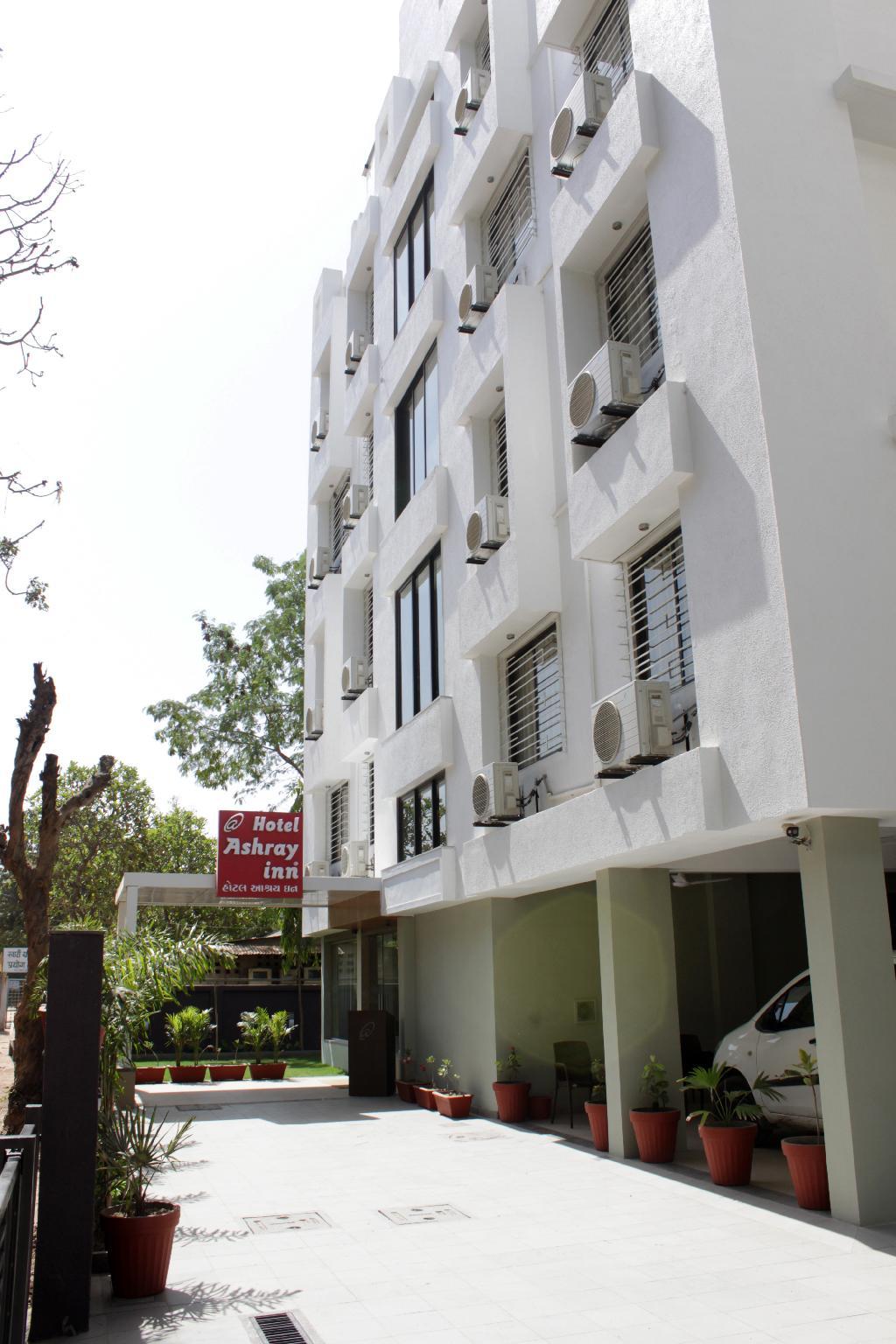
Ashram Road and the Riverfront hotels around Ellisbridge and Usmanpura put you 5–15 minutes from the ashram, with easy access to the old city across the river. If you are combining the visit with Gandhinagar or an early flight, the airport side is about 20 minutes north.
Planning Your Visit
A visit to Sabarmati Ashram works well in the morning, when the light is soft and the grounds are quiet. The museum building, with its clean lines and shaded verandas, offers a calm space to understand Gandhi's philosophy. Carry water, as the walk from the gate to the museum is a few hundred metres. The ashram is wheelchair-accessible, though some paths are gravel. Allow at least an hour to see the exhibits and the living quarters.
The ashram's location on the riverbank makes it a pleasant place for a short walk. The Sabarmati Riverfront promenade connects to the ashram, so you can combine a visit with a stroll along the water. Nearby, the Atal Bridge footbridge offers views of the ashram from the east bank. There is no food inside the ashram, but small stalls outside sell snacks and cold drinks. The area is generally safe and family-friendly.
Understanding the Ashram's Legacy
Sabarmati Ashram was not just a home but a laboratory for Gandhi's experiments with truth and simple living. The museum's exhibits include letters, photographs, and a model of the Dandi March. The ashram's architecture reflects Gandhi's values: open, airy, and functional. The charkha (spinning wheel) on display symbolises self-reliance. The ashram remains a working institution, hosting workshops and discussions on non-violence.
The ashram's role in the Dandi Salt March is central to its story. On 12 March 1930, Gandhi and 78 followers walked from here to Dandi, 390 km away, to break the salt law. This act of civil disobedience inspired millions. The ashram's museum has a dedicated section on the march, with maps and timelines. For a deeper understanding, consider reading about the march before your visit. The ashram's library has books for reference.