Staying in Ahmedabad’s Old City: the pols
Gated lanes, carved wooden havelis and India’s first UNESCO World Heritage City on your doorstep.

Ahmed Shah founded Ahmedabad on the east bank of the Sabarmati in 1411, and the walled city he began is still the city’s heart. In 2017 it became India’s first UNESCO World Heritage City, recognised for its pols — gated residential lanes built by communities of families, castes and trades — and for monuments that blend Hindu, Jain and Islamic architecture.
What a pol is
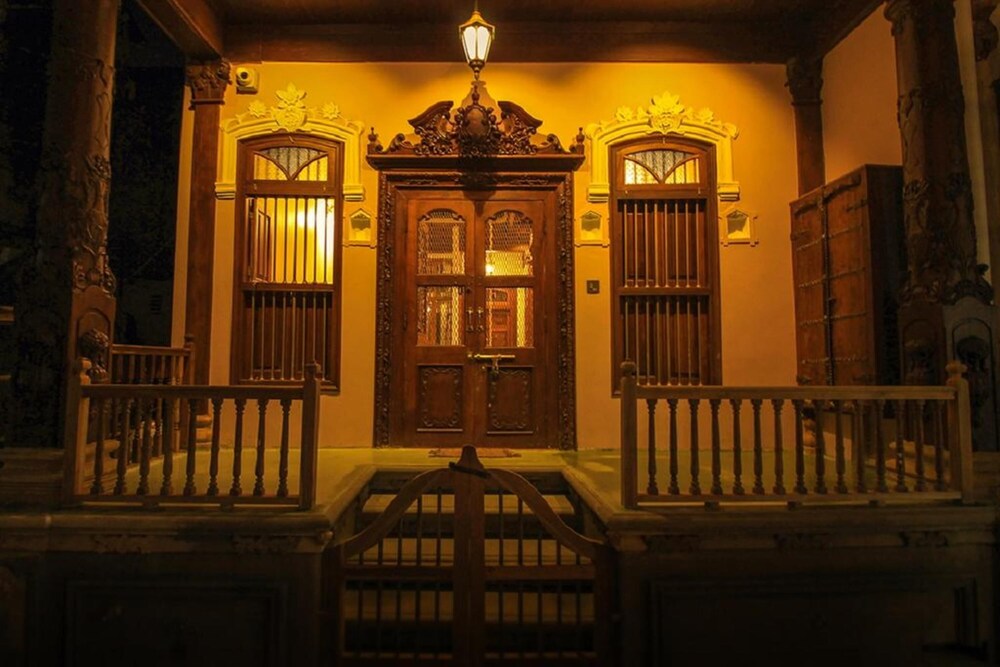
A pol is a micro-neighbourhood: one or two gated entrances, a narrow lane, houses with carved wooden facades, a community well or bird feeder (chabutro), and often a small temple. There are hundreds of them. Walking through feels like stepping inside the city’s private life — be respectful, ask before photographing people, and keep your voice down in the mornings.

Why stay here
- You can join the early-morning heritage walk without a long ride.
- Manek Chowk’s night market is a short walk away.
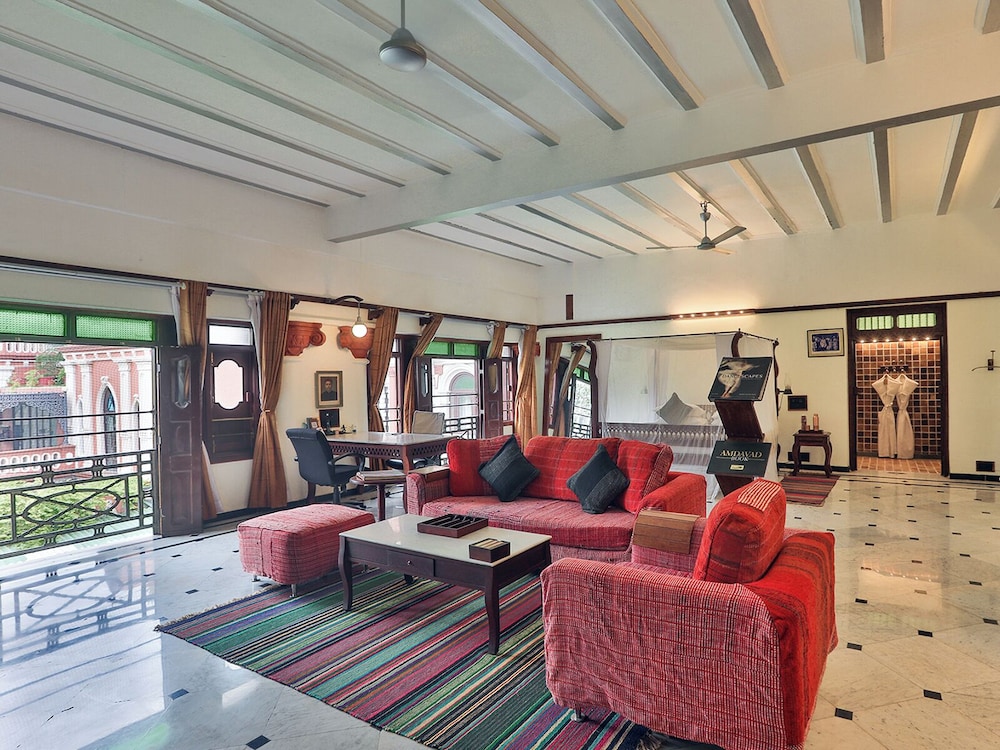
- Restored havelis offer courtyards, carved woodwork and home-style Gujarati food.
- Jama Masjid, Sidi Saiyyed and Ahmed Shah’s tomb are all within 15 minutes on foot.
Things to know
Streets are narrow and busy, so cars often can’t reach haveli doors — expect a short walk with your bags. Rooms are characterful rather than large, and few have pools. If you need a gym, business centre or quick access to SG Highway, stay west of the river and visit the old city by metro or auto instead.
Getting around
Autos are the easiest way through the lanes. The metro’s East–West line stops at Kalupur and the old city edge, and the Riverfront bridges link you to the west bank in minutes. Ahmedabad Junction (Kalupur) railway station is on the eastern side of the old city.
A short history of the walled city
Ahmed Shah I, the Sultan of Gujarat, laid the foundations of his new capital beside the older settlement of Ashaval in 1411. Over the next century his successors built the Bhadra Fort, the Teen Darwaza triple gateway and more than fifty mosques, many using carved stone from earlier Hindu and Jain temples. The result is a style found nowhere else: Islamic layouts with lotus motifs, temple-style pillars and delicate stone screens. Later the Mughals, Marathas and British each added their own layers, and the city wall — with twelve gates — defined Ahmedabad’s edge until the 20th century.
Trade made the city rich. Jain and Hindu merchants built wooden havelis with carved brackets, courtyards and painted ceilings, and the pols grew around them as self-governing communities. When textile mills arrived in the 19th century, Ahmedabad became the ‘Manchester of the East’, and many families moved west of the river. The old city kept its lanes, festivals and food — which is exactly why UNESCO recognised it in 2017.

The landmarks within walking distance
- Jama Masjid (1424) — 260 pillars around a vast courtyard, built by Ahmed Shah himself.
- Ahmed Shah’s Tomb and the Rani no Hajiro — royal tombs just east of the mosque, beside Manek Chowk.
- Teen Darwaza — the triple gateway that once led to the royal square, now framed by market stalls.
- Bhadra Fort and the Bhadrakali temple — the city’s founding citadel, with views from its ramparts.
- Swaminarayan Temple, Kalupur (1822) — richly carved in Burmese teak and the starting point of the heritage walk.
- Hutheesing Jain Temple — white marble just outside Delhi Darwaza, built in 1848.
Choosing a heritage haveli
A handful of havelis have been restored as guesthouses and boutique hotels. They vary widely: some have air-conditioned rooms, private bathrooms and rooftop dining; others are simpler homestays. Before you book, check whether rooms face the street or the courtyard (courtyard rooms are quieter), whether there is lift access (many have steep wooden stairs), and whether the hotel can arrange luggage porters from the nearest drivable road.
Haveli stays usually include breakfast — often a Gujarati spread of thepla, poha, khaman and chai — and many offer home-cooked thali dinners. Staff tend to be excellent informal guides to the pols and can introduce you to craftspeople nearby.
Food in and around the pols
Mornings start with fafda and jalebi or a plate of khaman from long-established farsan shops. At lunch, look for a traditional Gujarati thali with endless refills. In the evening, Manek Chowk becomes a giant open-air kitchen: pav bhaji sizzling on huge griddles, chocolate and cheese sandwiches, dosas and kulfi until well after midnight. Bhatiyar Gali, near Teen Darwaza, is the place for Mughlai kebabs and biryani.

Practical tips
- Dress modestly and remove shoes at temples and mosques; carry socks for hot stone floors.
- Pols are safe, but lanes are a maze — download offline maps or hire a local guide.
- Most shops close on Sunday mornings; Manek Chowk’s food stalls run every night.
- Two-wheelers squeeze through tiny lanes — stay alert when walking.
- Cash is useful for street food and autos, though UPI works almost everywhere.
Staying in the old city is not for everyone, but if you want to wake up to temple bells, eat where the locals eat and walk out into six centuries of history, there is no better base in Ahmedabad.
Navigating the Pols
The pols of Ahmedabad's old city are a maze of narrow, winding lanes. Each pol has a distinct character, often centred around a temple, a chabutara, or a community well. The gates, or khadkis, were originally closed at night for security. Today, they remain open, but the sense of community endures. Walking through a pol, you will see women chatting on doorsteps, children playing, and artisans at work. The wooden havelis, with their intricate carvings and jharokhas, are a highlight. Many are still lived in, offering a glimpse into a living heritage.
To explore the pols effectively, start early in the morning when the lanes are quiet and the light is good for photographs. A map or a local guide can help you navigate, as the layout can be confusing. Some pols are well-known, such as Dhal ni Pol, one of the oldest, and Khadia, known for its market. Respect residents' privacy; ask before taking photographs of people. The pols are a living neighbourhood, not a museum. Carry water and wear comfortable shoes, as the walking can be extensive but rewarding.
Festivals in the Old City
Ahmedabad's old city comes alive during festivals, especially Uttarayan (Makar Sankranti) on 14 January. The sky over the pols fills with kites, and rooftops are crowded with families flying and fighting kites. The International Kite Festival draws participants from around the world. The old city's narrow lanes become a sea of colour, with stalls selling kites, strings, and local snacks like undhiyu and jalebi. The atmosphere is electric, and visitors are welcome to join in, though rooftops require permission from residents.
Navratri, in September or October, is another major celebration in the old city. The pols host garba and dandiya raas performances, often in community grounds or temple courtyards. The music and dancing continue late into the night. Diwali in October or November sees the pols illuminated with oil lamps and fairy lights. Visiting during these festivals offers a deeper understanding of the city's culture. Check dates in advance, as they change annually. The old city is particularly crowded during these times, so plan accommodation and transport ahead.